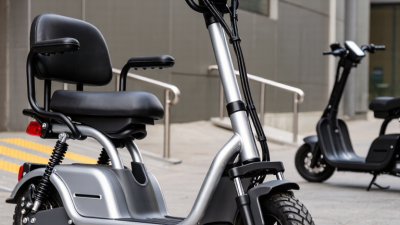
Choosing among the 10 Best Heavy Duty Mobility Scooters for Global Buyers requires more than comparing prices and motor sizes. A capable scooter must support the rider securely, handle daily terrain, and remain practical after purchase. Heavy duty mobility scooters often include reinforced frames, wider seats, stronger suspension, and higher weight capacities. However, these features can increase overall weight and reduce portability.
A professional evaluation should consider real riding conditions. Picture a user crossing uneven pavement, climbing a gentle ramp, or turning inside a narrow apartment hallway. Motor power matters, but so do ground clearance, braking performance, turning radius, and tyre design. Battery range should match genuine travel needs, not only laboratory claims. Seat width, armrest adjustment, and control placement also influence comfort during longer journeys. Small details matter.
Global buyers face additional questions. Can the supplier provide replacement batteries, tyres, and controllers? Does the charger match the destination’s electrical system? Are warranty terms clear and service support reachable? Local mobility equipment rules may also differ, so buyers should verify requirements before ordering. That step is easy to overlook. It should not be.
This guide compares leading heavy duty mobility scooters through practical performance, comfort, durability, safety features, and ownership value. The ranking is useful, but no ranking is perfect. Rider weight, climate, terrain, storage space, and transport access can change the best choice. We focus on reliable evidence, manufacturer specifications, user experience, and realistic limitations. A strong scooter is not merely powerful. It is dependable when the pavement is rough and support is needed.
What Defines a Heavy-Duty Mobility Scooter for Global Users
A heavy-duty mobility scooter is built for stability, endurance, and demanding daily travel. Its frame should support higher user weights without excessive flex or noise. A practical evaluation includes the stated load limit, seat width, ground clearance, and braking response. These details matter on uneven sidewalks, ramps, and compact gravel paths. Wider pneumatic or solid tires can improve control, although they may affect comfort and maintenance.
Motor performance should match real-world conditions, not only showroom claims. Dual motors can provide stronger hill control, but they may increase weight and energy consumption. A reliable battery should support the user’s routine, including temperature changes and occasional detours. Weather-resistant wiring and sealed electrical components are valuable for global users. Still, “weather-resistant” does not mean waterproof. That distinction is often overlooked.
Transport also defines usability. A heavy scooter may be stable but difficult to lift, ship, or store. Check its total weight, turning radius, charging requirements, and detachable parts. Local voltage compatibility and replacement-part access deserve attention before purchase. Service quality can matter more than a slightly higher top speed. I would also test the seat after thirty minutes, not just sit briefly in a showroom. Comfort can change dramatically on longer journeys. Specifications help, but practical testing reveals the weaknesses.
| Rank | Heavy-Duty Scooter Profile | Best Use | Maximum User Weight | Maximum Speed | Advertised Range | Ground Clearance | Turning Radius | Typical Seat Width | Approx. Scooter Weight | Battery Configuration | Global-Buyer Advantage |
|---|---|---|---|---|---|---|---|---|---|---|---|
| 1 | Heavy-duty 4-wheel outdoor scooter | Mixed urban and outdoor travel | 181 kg / 400 lb | 15 km/h / 9.3 mph | Up to 40 km / 25 mi | 12–15 cm / 4.7–5.9 in | 150–175 cm / 59–69 in | 46–51 cm / 18–20 in | 120–150 kg / 265–331 lb | Two 12 V deep-cycle batteries; commonly 35–55 Ah | Stable four-wheel platform with practical clearance for uneven pavements |
| 2 | Extra-capacity bariatric 4-wheel scooter | High-load daily mobility | 227 kg / 500 lb | 10–13 km/h / 6.2–8.1 mph | Up to 32 km / 20 mi | 10–13 cm / 3.9–5.1 in | 165–190 cm / 65–75 in | 51–61 cm / 20–24 in | 145–190 kg / 320–419 lb | Two 12 V batteries; commonly 50–75 Ah | Higher load rating and wider seating for larger users |
| 3 | Long-range touring scooter | Large campuses, resorts and extended trips | 181 kg / 400 lb | 15–18 km/h / 9.3–11.2 mph | Up to 50 km / 31 mi | 13–16 cm / 5.1–6.3 in | 170–210 cm / 67–83 in | 46–56 cm / 18–22 in | 135–180 kg / 298–397 lb | Two 12 V batteries; commonly 55–100 Ah | Large battery capacity supports longer journeys between charges |
| 4 | All-terrain pneumatic-tyre scooter | Grass, gravel and outdoor paths | 158–181 kg / 350–400 lb | 13–15 km/h / 8.1–9.3 mph | Up to 35 km / 22 mi | 15–20 cm / 5.9–7.9 in | 160–200 cm / 63–79 in | 46–56 cm / 18–22 in | 125–175 kg / 276–386 lb | Two 12 V batteries; commonly 35–75 Ah | Pneumatic or semi-pneumatic tyres improve traction on loose surfaces |
| 5 | Heavy-duty suspension scooter | Rough roads and frequent outdoor use | 181 kg / 400 lb | 15–18 km/h / 9.3–11.2 mph | Up to 40 km / 25 mi | 14–18 cm / 5.5–7.1 in | 155–190 cm / 61–75 in | 46–56 cm / 18–22 in | 130–185 kg / 287–408 lb | Two 12 V batteries; commonly 40–75 Ah | Front and rear suspension can improve comfort over cracked surfaces |
| 6 | Compact heavy-duty 4-wheel scooter | Indoor-outdoor use where space is limited | 159 kg / 350 lb | 10–13 km/h / 6.2–8.1 mph | Up to 25 km / 15.5 mi | 8–11 cm / 3.1–4.3 in | 125–155 cm / 49–61 in | 43–51 cm / 17–20 in | 95–135 kg / 209–298 lb | Two 12 V batteries; commonly 20–40 Ah | Narrower dimensions improve manoeuvrability in homes and shops |
| 7 | Heavy-duty 3-wheel manoeuvrability scooter | Indoor areas and smooth paved surfaces | 159–181 kg / 350–400 lb | 13–15 km/h / 8.1–9.3 mph | Up to 32 km / 20 mi | 8–12 cm / 3.1–4.7 in | 105–135 cm / 41–53 in | 46–56 cm / 18–22 in | 100–145 kg / 220–320 lb | Two 12 V batteries; commonly 35–55 Ah | Small turning circle, although four-wheel scooters generally offer greater stability |
| 8 | Disassemblable heavy-duty travel scooter | Car transport and regional travel | 136–159 kg / 300–350 lb | 8–13 km/h / 5–8.1 mph | Up to 25 km / 15.5 mi | 6–10 cm / 2.4–3.9 in | 120–150 cm / 47–59 in | 43–51 cm / 17–20 in | 55–95 kg / 121–209 lb | Sealed lead-acid or lithium-ion options; capacity varies by configuration | Separates into liftable sections, but individual pieces may still be heavy |
| 9 | High-clearance utility scooter | Outdoor properties, farms and uneven driveways | 181 kg / 400 lb | 13–15 km/h / 8.1–9.3 mph | Up to 35 km / 22 mi | 18–23 cm / 7.1–9.1 in | 170–215 cm / 67–85 in | 46–56 cm / 18–22 in | 140–190 kg / 309–419 lb | Two 12 V batteries; commonly 50–100 Ah | High clearance reduces the risk of scraping on rough ground and thresholds |
| 10 | Heavy-duty scooter with power-adjustable seating | Comfort-focused daily mobility | 181–227 kg / 400–500 lb | 10–15 km/h / 6.2–9.3 mph | Up to 35 km / 22 mi | 10–15 cm / 3.9–5.9 in | 155–195 cm / 61–77 in | 51–61 cm / 20–24 in | 145–200 kg / 320–441 lb | Two 12 V batteries; commonly 50–100 Ah | Adjustable seating can improve posture, transfer access and long-term comfort |