China has become a major manufacturing base for mobility scooters for seniors, serving distributors, care providers, and private buyers worldwide. This growth reflects a wider demographic shift. The United Nations World Social Report 2023 projects that people aged 65 and older will reach 16% of the global population by 2050. Demand is becoming more practical, not merely commercial.
The World Health Organization’s Global Report on Assistive Technology estimates that more than 2.5 billion people need assistive products today. That figure may exceed 3.5 billion by 2050. However, access remains uneven, especially in lower-income markets. A reliable Chinese supplier should therefore offer safe designs, adjustable seating, battery guidance, spare parts, and clear user instructions. Small details matter. A stable armrest matters. So does a charger that matches local voltage requirements.
This guide examines leading Chinese suppliers through product quality, manufacturing experience, customization, certifications, and after-sales support. It also considers compliance with relevant mobility-device standards, including ISO 7176 testing principles where applicable. Market research reports from Grand View Research and Fortune Business Insights indicate continued expansion in the global mobility equipment sector, although market estimates differ by product definition and region. That limitation deserves attention. A polished catalogue does not prove dependable production. Factory audits, sample testing, warranty terms, and customer references provide stronger evidence. Supplier rankings can never be perfectly objective, but transparent criteria make decisions more defensible. The best partner is not always the cheapest. It is the supplier that consistently delivers safe, comfortable, and serviceable scooters for real senior users.
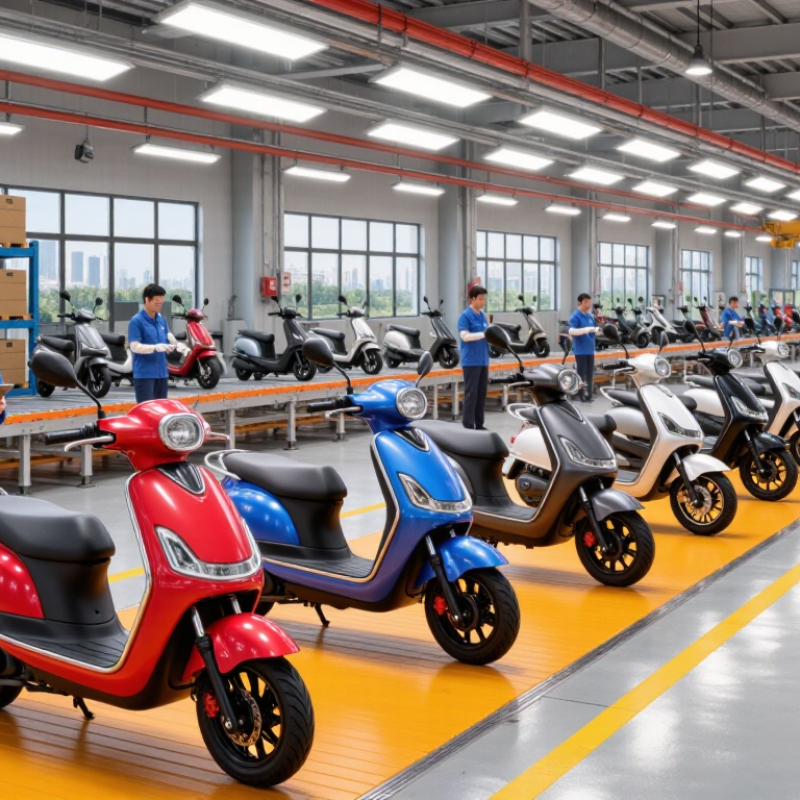
China Top Mobility Scooters for Seniors Suppliers
What Defines a Reliable China Mobility Scooter Supplier for Seniors
A reliable supplier understands that senior mobility scooters are daily safety equipment, not simple export products. Their engineers should explain turning radius, seat height, brake response, battery range, and safe load limits clearly. Practical testing matters. Ask for inspection records, sample units, and videos showing braking on a gentle slope. Vague answers deserve caution.
A dependable China supplier also controls production details. Check whether frame welding, wiring, tires, and battery connections receive documented inspections. The scooter should move steadily across tiled floors, outdoor paths, and small ramps. A quiet motor is useful, but stable handling matters more. Request user manuals with large text and clear charging instructions. Small details count.
After-sales support often reveals the supplier’s real reliability. Confirm spare-parts availability, warranty procedures, response times, and technician training before placing a large order. A supplier may offer a low price yet provide little help after delivery. That becomes expensive for older users and distributors. Do not rely on showroom appearance alone. It can mislead.
A thoughtful supplier welcomes independent product checks and accepts reasonable design feedback. They should also explain battery transport documents and packaging protection without making unrealistic promises. No factory is perfect. I would still expect honest limits, consistent communication, and corrective action when a sample fails. Reliability grows through evidence, not polished words.
| Evaluation Dimension | Reliable Supplier Benchmark | Relevant Technical Reference | Evidence to Request | Why It Matters for Senior Users |
|---|---|---|---|---|
| Product safety and design | Documented risk assessment, stable chassis design, anti-tip protection, reliable braking and clearly labeled controls. | ISO 7176 series and EN 12184 are widely used references for powered wheelchairs and mobility scooters. | Test reports, product risk assessment, user manual and independent inspection records. | Reduces the risk of tipping, unintended movement and incorrect operation. |
| Battery compliance | Battery cells, battery packs and chargers are traceable and tested for transport and electrical safety. | UN 38.3 is required for the transport testing of lithium batteries; IEC 62133-2 is a relevant rechargeable battery safety standard. | UN 38.3 test summary, IEC 62133-2 report where applicable, charger specifications and battery traceability records. | Helps prevent overheating, premature battery failure and shipping delays. |
| Quality management system | A documented quality system with incoming inspection, in-process checks, final inspection and corrective-action procedures. | ISO 9001 certification is a recognized framework for quality management systems. | Current certificate, scope of certification, inspection checklist and sample quality records. | Creates consistent product quality across repeated production batches. |
| Load and stability performance | Published maximum user weight, gradient capability, turning radius and ground-clearance figures supported by testing. | Performance claims should be measured under stated test conditions and aligned with the applicable product standard. | Technical datasheet, test conditions, rated-load test results and stability test documentation. | Allows buyers to match the scooter with the user’s weight, terrain and daily route. |
| Driving range transparency | Range is stated with battery capacity, user load, speed, temperature, terrain and test method. | Theoretical battery capacity alone does not guarantee real-world driving range. | Range test protocol, battery voltage and amp-hour rating, charger details and published limitations. | Prevents unrealistic expectations and helps seniors plan trips safely. |
| Ergonomics and accessibility | Adjustable seat or tiller, easy-to-read controls, comfortable armrests, adequate legroom and simple access to charging. | Design should accommodate reduced strength, balance, vision and dexterity without relying on complex controls. | Dimensional drawings, user manual, photographs of adjustment points and sample-user evaluation records. | Improves comfort, confidence and safe independent use. |
| Production capability | Dedicated assembly, electrical testing, final inspection and controlled supplier management for key components. | A capable factory should demonstrate repeatable processes rather than relying only on trading activity. | Factory audit, production-flow photographs, equipment list, capacity statement and batch traceability process. | Supports stable lead times, consistent specifications and scalable orders. |
| After-sales service | Clear warranty terms, spare-parts availability, troubleshooting procedures and defined response times. | Warranty coverage should identify exclusions, consumables, battery terms and replacement procedures. | Warranty document, spare-parts list, service manual, fault-code guide and support workflow. | Minimizes downtime and makes maintenance easier for users and distributors. |
| Documentation and labeling | Accurate manuals, warning labels, rating plates, wiring diagrams and spare-parts identification in the target language. | Documentation should match the delivered model and its actual electrical and mechanical specifications. | Manual samples, label artwork, rating-plate photographs and document revision history. | Reduces misuse and supports safe operation, servicing and regulatory review. |
| Export and regulatory readiness | Ability to provide destination-market documents, packaging specifications and product-specific compliance evidence. | Requirements vary by destination; CE-related obligations in Europe and local medical-device or electrical rules may apply depending on classification and intended use. | Declaration of conformity where applicable, test reports, shipping documents and destination-market labeling samples. | Reduces customs, legal and product-registration risks. |
| Sample and inspection policy | Willingness to provide production samples and accept pre-shipment or third-party inspection against an approved specification. | Inspection should cover appearance, dimensions, electrical functions, braking, charger performance and packaging. | Approved sample, inspection checklist, defect classification and corrective-action records. | Confirms that delivered units match the agreed safety and performance requirements. |
Note: Standards and compliance requirements can vary by destination market, product classification and battery type. Buyers should verify current local regulations and request product-specific evidence before placing an order.