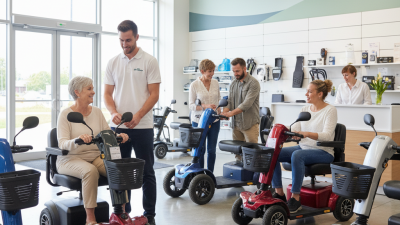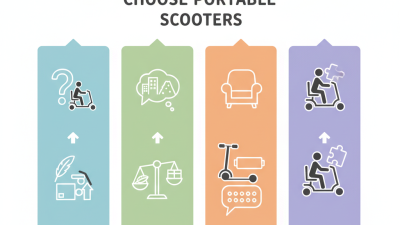

Choosing among scooters for elderly buyers in 2026 requires more than comparing prices, colors, and advertised speeds. A suitable model should match the rider’s balance, strength, vision, home layout, and usual travel distance. Dr. Mary Tinetti, a respected geriatrician and falls researcher, has stated, “Mobility is a key component of healthy aging.” That principle guides this review. A scooter should support independence while reducing avoidable strain.
The ten models examined here represent different priorities. Some offer compact frames for narrow hallways and apartment lifts. Others provide larger seats, stronger suspension, or longer battery ranges for outdoor paths. Turning radius matters beside a kitchen counter. Control levers should feel clear, even with limited hand strength. Seat height matters too, especially when standing up after a short trip. Practical details count.
No ranking can predict every driveway.
We also consider weight capacity, charging time, transportability, braking response, warranty coverage, and local service support. These factors often matter more than a glossy specification sheet. A powerful scooter may feel cumbersome indoors. A lightweight model may struggle on uneven pavement. That trade-off deserves honest attention.
This guide is designed for older buyers, families, and caregivers who want evidence-based direction without unrealistic promises. It encourages a professional assessment when medical, balance, or cognitive concerns exist. Product descriptions can change, and real-world performance may vary by rider and terrain. That limitation is important. The best scooters for elderly users are not always the fastest or most expensive; they are the ones that feel stable, understandable, and genuinely useful in daily life.
What Makes a Scooter Suitable for Elderly Riders in 2026
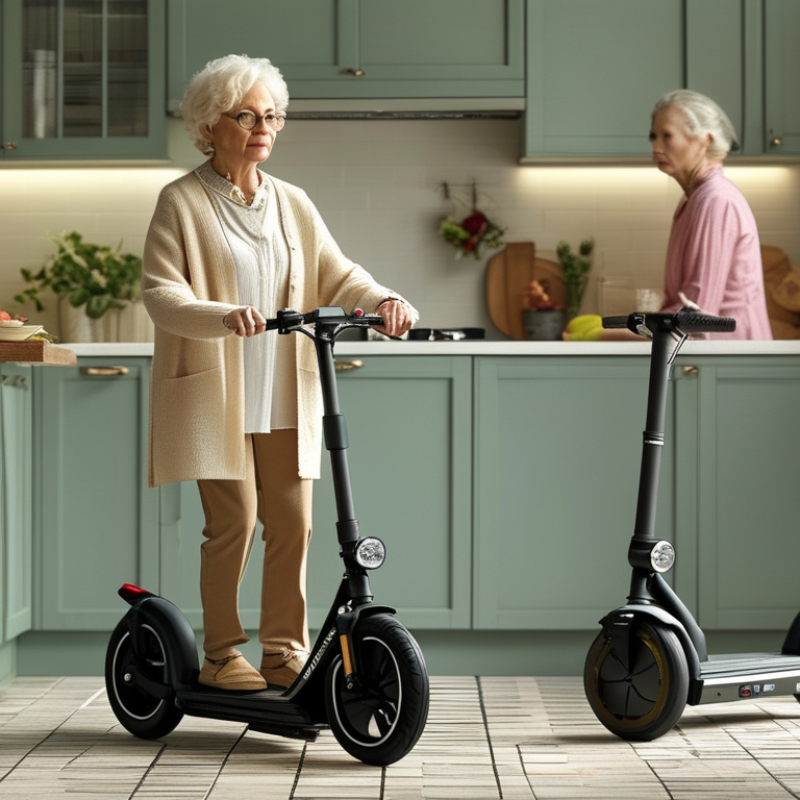
A suitable scooter begins with the rider, not the sales ranking. The WHO and UNICEF Global Report on Assistive Technology (2022) estimates that 2.5 billion people need assistive products worldwide. That need includes safer, more independent outdoor movement. In 2026, elderly buyers should look for a stable base, predictable braking, and an adjustable tiller. A firm, height-adjustable seat can reduce hip strain during longer trips. Large controls help riders with weaker grip or limited vision. Simple matters.
Safety details deserve close attention. The scooter should fit through the home doorway and turn comfortably near kitchen counters. A low step-over height helps riders with stiff knees. Bright lights, reflectors, and a clear battery display improve visibility and confidence. The CDC reports that more than 3 million older adults receive emergency treatment for fall injuries each year. A scooter cannot prevent every fall, but steady acceleration and anti-tip protection may reduce avoidable mistakes. An occupational therapist can assess posture, reach, and route conditions before purchase.
Range claims need careful judgment. Cold weather, hills, rider weight, and tire pressure can reduce real-world battery performance. Numbers on a brochure are not personal experience. I would test the scooter on a pavement crack, a gentle slope, and a tight hallway. Certification against relevant mobility-device standards, such as ISO 7176 or applicable ANSI/RESNA requirements, adds useful evidence. Still, certification does not replace practice. A short trial may reveal an awkward control, uncomfortable seat, or difficult transfer that specifications miss.
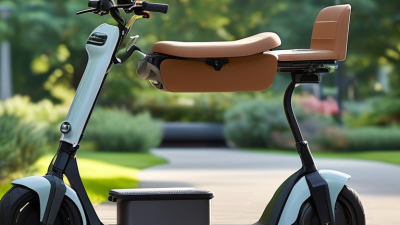
Key Safety, Comfort, and Accessibility Features to Compare
Choosing among the top ten mobility scooters requires more than checking speed and battery range. The World Health Organization reports that falls cause about 684,000 deaths globally each year, with adults over 60 facing the highest risk. WHO’s Falls fact sheet, 2021, supports careful attention to stability, braking, and visibility.
Look for anti-tip wheels, responsive electromagnetic brakes, bright front and rear lights, reflectors, and a clear horn. A low step-through frame can reduce awkward transfers. Adjustable armrests and a swiveling seat may help users with stiff hips or knees. Test the tiller while seated. Controls should be readable, reachable, and usable with limited hand strength. Keep it simple.
The CDC reports that more than 3 million older adults receive emergency treatment for falls annually, and over 800,000 are hospitalized. Its Older Adult Falls Data highlights the importance of balance and environmental safety. Ask whether the scooter’s turning radius fits narrow hallways. Check ground clearance near door thresholds. Confirm the charger is easy to lift and the battery indicator is understandable. A larger battery is not automatically better; I still tend to overvalue it. That is a mistake. Real-world range changes with weight, slopes, temperature, tire pressure, and frequent stops. Request documented range testing, ideally using recognized ISO 7176 methods, then arrange a supervised trial over ramps, carpet, and uneven pavement.
Choosing among the top 10 scooters for elderly buyers in 2026 requires more than checking speed. The World Health Organization’s Global Report on Assistive Technology estimates that 2.5 billion people need assistive products worldwide. Access remains uneven. A suitable scooter should match balance, hand strength, vision, and daily travel habits.
The strongest choices usually include lightweight folding scooters, compact three-wheel models, stable four-wheel travel scooters, and heavy-duty outdoor scooters. A folding design may fit beside a car seat, but its smaller wheels can struggle over cracked pavements. Three-wheel scooters turn neatly in kitchens. Four-wheel versions usually feel steadier near sloped sidewalks. Check the turning radius, seat width, ground clearance, battery range, and loaded weight limit. Numbers matter.
Real-world use exposes weaknesses. A claimed 25-kilometer range may fall sharply with hills, cold weather, heavier riders, or frequent stops. The World Health Organization also stresses user training and proper fitting, not equipment alone. Buyers should test braking, steering, transfers, and charging access before purchase. I would not rank a fast scooter above a predictable one. That sounds obvious, yet shopping pages often reward speed. The best 2026 shortlist should also consider service availability, warranty terms, replacement batteries, and storage space. A perfect ranking is impossible. Personal comfort changes everything.
Matching a scooter to an older buyer starts with mobility needs, not speed.
The WHO and UNICEF Global Report on Assistive Technology (2022) estimates that 2.5 billion people need assistive products worldwide. That need varies sharply.
A lightweight travel scooter suits short indoor trips, car transport, and occasional shopping.
A mid-size scooter offers better stability for pavements and longer local journeys.
Heavy-duty models may help users needing higher weight capacity, longer range, or stronger suspension.
A practical top-ten comparison should examine turning radius, seat support, controls, ground clearance, and battery access.
Measure the narrowest doorway at home first. A scooter that cannot turn beside the bed is a poor match, even with excellent range.
The CDC reports that one in four adults aged 65 and older falls each year. Therefore, stable steering, visible controls, and reliable braking deserve more attention than stylish extras.
Buyers with hand weakness may need simple fingertip controls.
Users with fatigue may benefit from adjustable armrests and a supportive backrest.
I would not rank portability above comfort every time. That assumption can fail after one tiring afternoon.
Tips: Ask a rehabilitation professional to assess posture, strength, and daily routes.
Test the scooter over thresholds, ramps, and uneven pavement.
Check whether the battery and controls remain manageable without assistance.
Review the manufacturer’s measured range carefully; hills, rider weight, temperature, and battery age can reduce real-world distance.
Test slowly. That matters.
Choosing among the top scooters for elderly buyers in 2026 should begin with the rider, not the feature list. Fit matters. Measure doorway width, turning space, and storage height before visiting a dealer. During a test ride, check whether the seat supports the lower back and whether both hands reach the controls comfortably. A simple control panel can reduce confusion, especially in bright sunlight or poor weather. Ask a mobility specialist to assess posture, balance, and transfer safety when needed.
Maintenance affects reliability more than many buyers expect. Read the charging instructions carefully and use the supplied charger with a dry, ventilated outlet. Inspect tire pressure, wheel damage, lights, and brake response regularly. Keep battery contacts clean and dry. Arrange professional servicing if steering feels loose or braking becomes uneven. Battery performance may change in cold conditions, so storage temperature deserves attention. Small details matter.
Daily use also requires planning. Choose routes with smooth surfaces, safe crossings, and enough room to turn. Wear visible clothing and avoid carrying heavy bags on the handlebars. Start slowly. Practice reversing, stopping, and parking in an empty area. A family member can observe the first few sessions, but the rider should remain in control. I would not pretend every advertised range matches real life; hills, weight, temperature, and frequent stops can reduce it. Recheck the scooter after several weeks. An uncomfortable seat or awkward control may seem minor at first, then become the reason it stays unused.
| Rank | Scooter Profile | Best Suited For | Configuration | Typical Maximum Speed | Typical Real-World Range | Approx. Scooter Weight | Typical User Capacity | Turning Radius | Battery and Charging | Buying and Maintenance Considerations | Recommended Usage Practices |
|---|---|---|---|---|---|---|---|---|---|---|---|
| 1 | Compact Travel Scooter | Indoor use Short shopping trips and paved sidewalks |
Three or four wheels; tiller steering; removable battery on many designs | Up to 4 mph | 8–12 miles per charge | 90–125 lb | 250–300 lb | Approximately 30–40 in | 24-volt sealed lead-acid or lithium battery; commonly 4–8 hours for a full charge | Choose adjustable tiller height and a seat that supports easy transfers. Inspect tire pressure, brakes, and battery connections monthly. Smaller solid tires reduce punctures but provide a firmer ride. | Use on smooth, dry surfaces. Avoid steep ramps, loose gravel, wet grass, and long outdoor journeys unless the manual specifically permits them. |
| 2 | Folding Portable Scooter | Transport-friendly Car travel, hotel corridors, and occasional outings |
Usually three or four wheels; manual or powered folding frame | Up to 4 mph | 8–15 miles per charge | 55–75 lb, excluding removable battery where applicable | 250–300 lb | Approximately 32–45 in | Rechargeable battery; charging commonly takes 4–8 hours. Confirm battery-removal and transport requirements before flying or using public transport. | Check the folding latch, hinges, and carry points before every trip. A low weight may mean less suspension, a smaller seat, and reduced stability on uneven ground. | Fold only on a level surface. Keep hands and clothing clear of hinges, and secure the folded scooter so it cannot move inside a vehicle. |
| 3 | Indoor Maneuverability Scooter | Tight spaces Homes, assisted-living facilities, and narrow aisles |
Three-wheel layout; compact wheelbase; narrow seat and tiller | Up to 4 mph | 8–15 miles per charge | 85–125 lb | 250–300 lb | Approximately 28–35 in | 24-volt battery system; typical charging time is 6–10 hours | The tighter turning circle improves maneuverability but offers less resistance to sideways tipping than a four-wheel design. Measure doorways, lift access, and storage areas before buying. | Slow down before turning. Keep both hands on the tiller and avoid diagonal approaches to ramps or curb cuts. |
| 4 | Stable Four-Wheel Travel Scooter | Balanced choice Older adults needing extra stability without a full-size scooter |
Four wheels; solid or pneumatic tires; padded swivel seat | Up to 4 mph | 10–18 miles per charge | 105–155 lb | 300–350 lb | Approximately 38–48 in | 24-volt sealed battery system; generally 6–10 hours to recharge | Four wheels improve straight-line stability, while the longer frame needs more turning space. Confirm that the seat height allows the user’s feet to rest comfortably on the floorboard. | Use the lowest practical speed in crowded areas. Cross small thresholds straight on and avoid sudden steering inputs. |
| 5 | Mid-Size All-Purpose Scooter | Daily errands Sidewalks, stores, clinics, and neighborhood travel |
Four wheels; larger seat; front and rear suspension on many models | Up to 5–6 mph | 15–25 miles per charge | 130–190 lb | 300–400 lb | Approximately 45–55 in | 24-volt or 36-volt sealed battery system; commonly 8–12 hours for a full charge | Look for electromagnetic braking, reflectors, a bright front light, and a high-visibility rear marker. Inspect suspension bushings and tire condition every few months. | Plan routes around curb ramps and accessible entrances. Charge after regular use rather than storing the battery completely discharged. |
| 6 | Heavy-Duty Four-Wheel Scooter | Higher weight capacity Users needing a wider seat, stronger frame, and increased stability |
Four wheels; reinforced chassis; wide seat; pneumatic or solid tires | Up to 6 mph | 20–30 miles per charge | 180–260 lb | 400–500 lb | Approximately 52–65 in | 24-volt or 36-volt high-capacity battery system; charging commonly takes 8–12 hours | Verify the complete occupied weight limit, including bags and accessories. A heavier frame may require a ramp, lift, garage storage, and more frequent tire and brake inspections. | Distribute cargo evenly and do not exceed the stated load limit. Use low speed on slopes, especially when carrying additional weight. |
| 7 | Long-Range Outdoor Scooter | Extended journeys Long paved paths, large communities, and frequent outdoor trips |
Four wheels; large battery pack; suspension; full lighting system | Up to 8 mph, where permitted | 25–35 miles per charge under moderate conditions | 220–330 lb | 400–500 lb | Approximately 55–70 in | 36-volt or 48-volt battery system; often 8–12 hours to recharge | Actual range decreases with rider weight, hills, cold temperatures, tire condition, and frequent stops. Check charger ventilation, battery terminals, suspension, lights, and brakes regularly. | Carry a charged phone, identification, water, and a route plan. Reduce speed on uneven surfaces and never assume the scooter is suitable for road traffic. |
| 8 | Comfort-Focused Suspension Scooter | Ride comfort Users sensitive to vibration or traveling over imperfect pavement |
Three or four wheels; front or full suspension; supportive high-back seat | Up to 6–8 mph | 18–30 miles per charge | 170–280 lb | 350–450 lb | Approximately 48–62 in | 24-volt, 36-volt, or 48-volt battery system; charging usually takes 8–12 hours | Suspension improves comfort but adds weight and moving parts. Check for loose fasteners, worn bushings, unusual noises, and reduced braking performance. | Adjust the seat, tiller, and armrests before moving. Keep the back supported and maintain a relaxed grip to reduce fatigue on longer rides. |
| 9 | All-Terrain Mobility Scooter | Outdoor surfaces Firm gravel, park paths, compacted trails, and uneven sidewalks |
Four wheels; high ground clearance; pneumatic tires; suspension | Up to 8 mph, where permitted | 20–35 miles per charge | 220–350 lb | 400–500 lb | Approximately 55–75 in | 36-volt or 48-volt battery system; typical charging time is 8–12 hours | More clearance does not make a scooter suitable for every trail. Inspect tire pressure, tread, axle hardware, suspension, and undercarriage after use on rough ground. | Avoid mud, deep sand, standing water, and steep side slopes. Approach obstacles slowly and squarely, and follow local accessibility and trail rules. |
| 10 | Lift-Friendly Disassemblable Scooter | Caregiver-assisted transport Users who need occasional vehicle transport but cannot lift a full-size scooter |
Three or four wheels; separates into multiple sections; removable seat and battery | Up to 4–5 mph | 10–18 miles per charge | Heaviest section commonly 35–60 lb | 250–350 lb | Approximately 38–52 in | 24-volt sealed battery system; commonly 6–10 hours to recharge | Confirm the heaviest-piece weight rather than only the total weight. Check locking pins, electrical connectors, and frame alignment after every reassembly. | Use two-person lifting or a suitable loading aid when necessary. Never operate the scooter while it is partially assembled or with an unsecured battery. |