

Choosing the right mobile wheelchair begins with understanding real mobility needs, not attractive product photos. The World Health Organization estimates that 1.3 billion people, or 16% of the global population, live with significant disability (WHO, Global Report on Health Equity for Persons with Disabilities, 2022). Wheelchairs remain essential assistive products for many users. However, comfort, terrain, transport, maintenance, and caregiver support differ widely between countries.
The WHO and UNICEF Global Report on Assistive Technology (2022) reports that more than 2.5 billion people need at least one assistive product. This number may exceed 3.5 billion by 2050. That growing demand makes product selection more important for distributors, healthcare providers, and families. A lightweight folding wheelchair may suit airport transfers and compact apartments. A powered model can reduce fatigue during long journeys. An all-terrain design may perform better on uneven streets, gravel, or rural paths.
Small details matter. Seat width, battery range, turning radius, footrest design, and repair access can change daily independence. International buyers should also review safety documentation, warranty terms, charging requirements, and relevant ISO 7176 wheelchair testing standards. Not every “portable” model is easy to lift. Not every “heavy-duty” model is comfortable.
This guide compares leading mobile wheelchair types for global buyers. It considers practical use, user experience, product reliability, and service limitations. Market forecasts can be useful, but they are not always consistent. Local evidence should guide final decisions. A careful comparison often prevents an expensive mismatch.
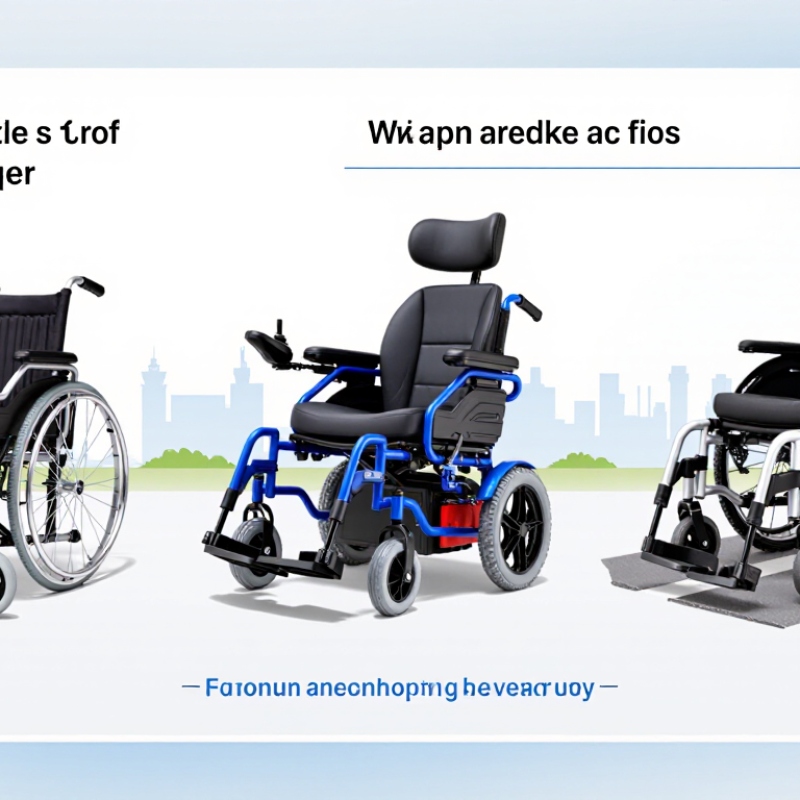
The World Health Organization estimates that roughly 80 million people need wheelchairs worldwide. Yet access remains uneven, especially in low- and middle-income countries. WHO’s Global Report on Assistive Technology states that more than 2.5 billion people need assistive products, with access gaps affecting nearly one billion people in these regions.
This demand covers very different users. Folding manual wheelchairs suit travelers, caregivers, and homes with limited storage. Rigid manual models can offer better energy efficiency for active users. Transport wheelchairs work well for short journeys, airports, clinics, and assisted movement. Power wheelchairs support people with limited upper-body strength, but batteries, charging access, and repair networks matter greatly.
The market still gets this wrong. A lighter frame is not automatically better. A cheaper chair may become expensive when spare parts are unavailable. The WHO Wheelchair Provision Guidelines emphasize assessment, fitting, training, and follow-up, not only product selection. Buyers should check seat width, cushion support, wheel durability, folding size, and local maintenance options.
Reported figures also need caution. “80 million” is a useful global signal, not a precise count for every country. Population surveys remain incomplete, and mobility needs change with age, injury, and chronic disease. The best choice is practical, repairable, and matched to daily terrain. A wheelchair crossing smooth indoor floors may struggle on gravel, steep sidewalks, or narrow doorways.

For global buyers, manual wheelchairs remain practical, repairable, and easier to transport than powered alternatives. The right type depends on strength, travel habits, and daily surfaces. A wheelchair is not a one-size-fits-all purchase.
Self-propelled wheelchairs use larger rear wheels with hand rims.
They suit users who can push independently and need control over speed and direction. Check the seat width, wheel position, and brake access carefully. A poor fit can cause shoulder strain.
Solid tires require less maintenance, while pneumatic tires may provide a softer ride on uneven roads.
I once assumed lighter always meant better. That was too simple.
Transit wheelchairs have smaller rear wheels and require an attendant to push.
They are useful in airports, clinics, shopping centers, and short indoor journeys. Their compact frames fit many vehicle spaces.
However, they offer limited user independence and may feel unstable on rough ground. Caregivers should test handle height, parking brakes, and footrest clearance before regular use.
Lightweight models balance portability with everyday function.
Aluminum frames can reduce lifting effort, but lower weight may affect durability or comfort. Folded dimensions matter when storage space is limited.
Ask about replacement parts, maintenance instructions, and local service support before ordering internationally.
Measurements should include hip width, lower-leg length, and cushion height. Small errors become painful quickly.
Product specifications also deserve verification, since published weights may exclude footrests or armrests.
Top Mobile Wheelchair Types for Global Buyers?
Power Wheelchairs: Comparing Rear-, Mid-, and Front-Wheel Drive Systems
Choosing a power wheelchair begins with the user’s daily terrain, not its appearance. Rear-wheel drive systems feel stable at higher outdoor speeds. Their larger turning circle can make small apartments difficult. They suit buyers who regularly travel across pavements, ramps, and uneven paths. However, rear wheels may struggle with tight indoor corners. Measure doorways carefully before ordering.
Mid-wheel drive places the main wheels beneath the user’s center of gravity. This layout offers a tight turning radius and precise indoor movement. It can feel natural around kitchen counters and crowded rooms. The smaller front and rear wheels may catch on steep edges or rough ground. A trial over thresholds is essential. Smooth showroom floors can hide this weakness.
Front-wheel drive systems can climb some obstacles effectively because the powered wheels meet the edge first. They often provide a stable outdoor feel and useful traction on slopes. Their front end may swing wider during turns, requiring extra space near furniture. Control settings also matter. A responsive joystick can feel unsafe for a new user, while slow settings may frustrate an experienced driver.
Seat width, suspension, battery range, and transport weight deserve equal attention. Local servicing and spare-part access are practical concerns for global buyers. I once assumed stronger outdoor performance meant better overall value. That assumption was incomplete. The best choice depends on posture, driving confidence, climate, road quality, and home layout. Test real obstacles before making a final decision.
| Comparison Dimension | Rear-Wheel Drive (RWD) | Mid-Wheel Drive (MWD) | Front-Wheel Drive (FWD) |
|---|---|---|---|
| Location of Drive Wheels | Two large powered wheels positioned behind the user | Two powered wheels positioned approximately beneath the user's center of gravity | Two large powered wheels positioned in front of the user |
| Indoor Maneuverability | Good Predictable handling, but usually needs more space to turn than a mid-wheel model. |
Excellent Typically offers the tightest turning performance and good control in corridors and small rooms. |
Very Good Compact turning behavior is possible, although the front wheels require additional clearance when turning. |
| Outdoor Stability | Excellent Stable and predictable at moderate outdoor speeds and over uneven paved surfaces. |
Very Good Balanced weight distribution supports smooth travel, but small front and rear casters may be more sensitive to uneven ground. |
Very Good Large front drive wheels can provide strong traction and help the chair approach obstacles directly. |
| Obstacle Handling | Good Performs well on standard thresholds and moderate surface changes when properly configured. |
Good Usually handles everyday thresholds well; performance depends strongly on caster size, suspension, and ground clearance. |
Excellent Front drive wheels can climb some thresholds and small obstacles more naturally than rear-mounted drive wheels. |
| Slope Performance | Excellent Often feels stable while climbing or descending slopes because the drive wheels remain behind the user. |
Very Good Central drive placement can provide balanced traction; electronic stability controls remain important. |
Good to Very Good Can climb effectively, but steering behavior and weight transfer may feel different on descents or uneven slopes. |
| Turning Characteristics | Turns around the rear section of the wheelchair. The front end may swing outward during tight turns. | Turns around a point close to the user's seating position, which generally simplifies maneuvering in confined spaces. | Turns around the front drive wheels. The rear of the wheelchair may swing outward during tight turns. |
| Straight-Line Tracking | Excellent Generally stable and easy to control over longer outdoor distances. |
Very Good Responsive and balanced, although steering may feel more sensitive to some users. |
Good Responsive steering, but users may need practice to maintain a straight path on irregular surfaces. |
| Typical Best Use | Outdoor mobility, long pathways, ramps, residential areas, and users who value stable forward travel. | Mixed indoor and outdoor use, apartments, hospitals, offices, shopping areas, and tight turning spaces. | Users who frequently encounter thresholds, uneven pavements, compact indoor areas, and forward-facing obstacles. |
| Main Advantages | Stable handling, strong outdoor manners, familiar driving feel, and good high-speed control. | Small turning footprint, balanced weight distribution, and strong all-round maneuverability. | Good obstacle approach, useful traction on many surfaces, and maneuverability in narrow areas. |
| Potential Limitations | Larger turning space may be required indoors; the front end can swing outward near furniture or doorways. | Small casters may be less comfortable over rough ground; the drive wheels and suspension can be more exposed underneath. | Rear-end swing requires awareness; steering response may take longer to learn, especially on slopes. |
| Transport and Storage Considerations | Overall length and turning envelope vary by model; check vehicle loading space and folded or disassembled dimensions. | Compact turning does not always mean compact transport size; verify total width, weight, and battery-removal options. | Long front drive wheels may affect ramp or lift clearance; confirm dimensions before international shipment. |
| Key Specifications to Verify | Maximum safe slope, ground clearance, suspension, turning radius, battery range, seat width, and outdoor speed. | Turning radius, caster design, suspension, ground clearance, battery range, seat width, and indoor width. | Obstacle-climbing capability, rear swing space, suspension, turning radius, battery range, and maximum safe slope. |
| Best Buyer Profile | Users prioritizing outdoor stability and predictable long-distance driving. | Users needing the most balanced performance between indoor maneuverability and outdoor mobility. | Users prioritizing forward obstacle handling and responsive maneuvering across mixed environments. |
| Specifications and driving behavior vary by wheelchair design, motor output, tire type, suspension, controller settings, user weight, battery configuration, and local terrain. Buyers should compare certified product measurements and local safety requirements before purchase. | |||
For global buyers, folding wheelchairs offer easier storage, shipping, and daily transport. Their frames often fit inside a car trunk, while quick-release wheels reduce the packed size. Weight matters, but a lighter wheelchair is not automatically better. Very light frames may feel less stable on uneven pavement. Seat width, rear wheel position, and folded height can change comfort and handling.
ISO 7176 standards provide useful reference points for wheelchair safety and performance. Relevant sections address stability, dimensions, braking, strength, durability, and transport use. Buyers should request clear test reports, not only an ISO statement on a product page. ISO compliance does not replace local transport or healthcare requirements. Check the wheelchair’s maximum user weight, brake performance, folding hinges, and frame condition before regular use. Small gaps near the folding joints deserve attention. They may indicate wear.
Tips: Measure your car’s trunk opening, not only its interior space. Ask for the folded length, width, height, and net weight. Test the chair with a cushion and footrests attached. Confirm whether the stated weight excludes removable parts. A practical trial is valuable. Roll it across a doorway threshold and lift it briefly. If the chair feels awkward after several attempts, the advertised compact size may not suit your routine.
Typical specification midpoints for commonly traded folding wheelchair categories. Actual dimensions vary by configuration; buyers should verify product-specific specifications and ISO 7176 test documentation.
Safety note: ISO 7176 is a series of tests covering wheelchair performance and safety, including stability, braking, durability, and strength. Compliance should be confirmed through applicable test reports rather than inferred from wheelchair type alone.
Top Mobile Wheelchair Types for Global Buyers?
Terrain often determines the right mobile wheelchair more than appearance. A compact indoor model may struggle on gravel, steep ramps, or wet pavement. Buyers should inspect tire size, ground clearance, suspension, and turning space. I have seen users choose narrow frames for easy transport, then regret poor stability outdoors. Measure doorways, elevator entrances, and vehicle storage areas before comparing models. Real routes matter.
Seat width affects comfort, posture, and safe control. Measure the user while wearing everyday clothing, not a winter coat. Allow modest clearance, but avoid excessive width, which can reduce support and maneuverability. Adjustable footrests and arm supports may help users with changing needs. Battery range requires similar honesty. Published figures often assume flat surfaces, light loads, and ideal temperatures. Hills, frequent stops, cold weather, and heavier users can reduce practical distance. Plan for less.
Local regulations can affect road access, lighting, maximum speed, insurance, and operator age. Requirements differ between countries and sometimes between cities. Confirm rules with the local transport authority before importing or modifying equipment. Also check charging voltage, plug compatibility, service coverage, and replacement battery procedures. A local therapist or qualified mobility dealer can assess fit and driving risks. My own buying checklists have missed small details, especially charging access. That mistake is avoidable.