
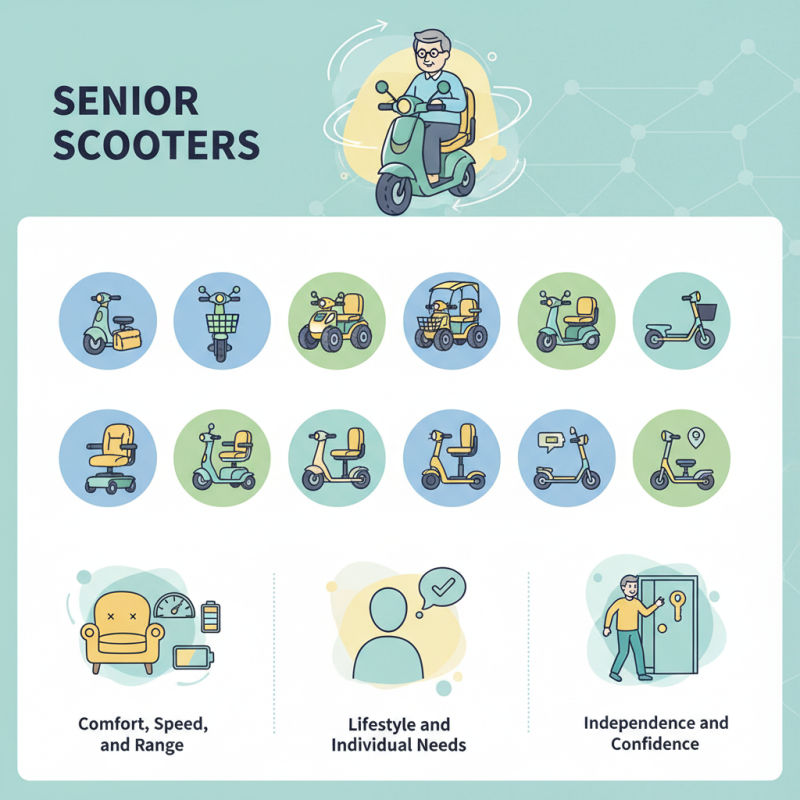
As we age, maintaining mobility and independence becomes increasingly important. For many seniors, the right scooters for seniors can significantly enhance their quality of life. These scooters provide a means to move freely and engage with the world.
When exploring options, several features should be considered. Comfort is essential. Many scooters come with cushioned seats and easy-to-use controls. Speed and range are also crucial. Some models can travel longer distances than others. However, it is worth noting that not every scooter suits all needs. Age-related challenges can affect individual preferences.
Choosing the right scooter can feel overwhelming. Seniors must think about their lifestyle and specific requirements. Learning about different models helps identify the best fit. With the right scooter, seniors can regain their independence, stepping out with confidence.
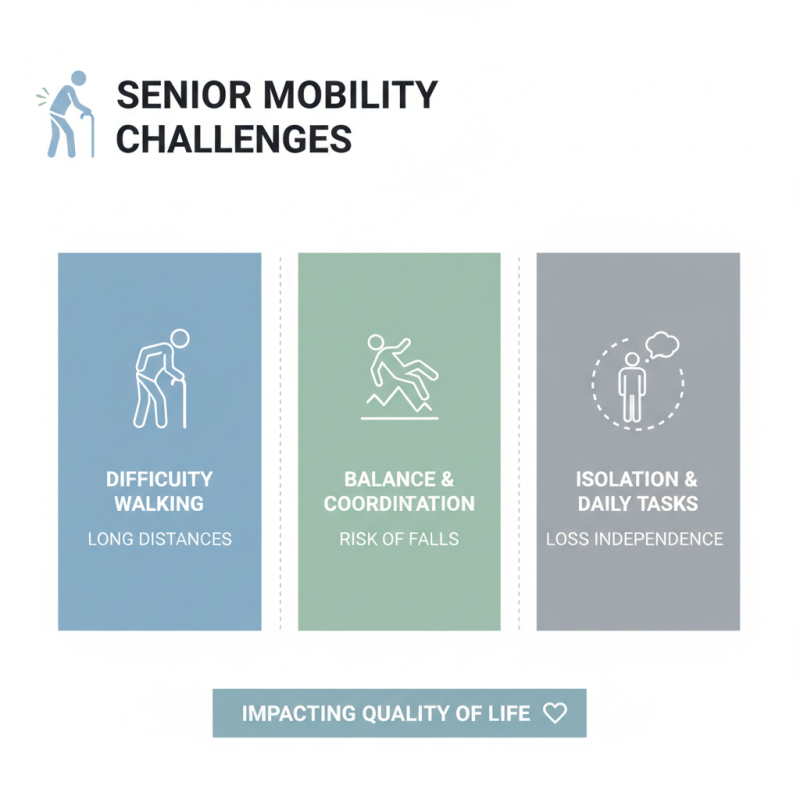
As seniors age, mobility challenges often arise. Many face difficulty walking long distances. Others struggle with balance and coordination. This can lead to a sense of isolation. For some, everyday tasks become daunting.
Many seniors rely on mobility aids, but options can be overwhelming. Some prefer scooters for their ease of use. These devices can provide a newfound sense of freedom. However, not all scooters meet everyone’s needs. Some may lack adequate support. Others might be hard to operate.
Engaging with the community is essential. Seniors should consider local resources. Family and friends can offer support too. Sharing experiences about mobility can help address concerns. Learning from others’ challenges provides valuable insights. Finding the right solution may take time and patience.
When choosing a scooter for seniors, mobility and comfort are essential. Opt for a model with ergonomic seating. This feature ensures that users can sit comfortably for extended periods. Look for scooters with adjustable armrests and a swivel seat. These details make getting on and off easier. Keeping balance is vital, so a wider base can help.
Battery life is another critical aspect to consider. A long-lasting battery can provide more freedom for outdoor activities. Users should regularly check the battery health, as an unreliable battery can limit mobility. Weight capacity is also important. A sturdy scooter can offer more stability.
Lastly, consider portability. Lightweight designs are easier to transport, but they often compromise sturdiness. Think about the user’s lifestyle. Some may prefer a scooter for daily errands, while others may want one for short trips. Go through these features carefully to find the right balance between comfort, safety, and usability.
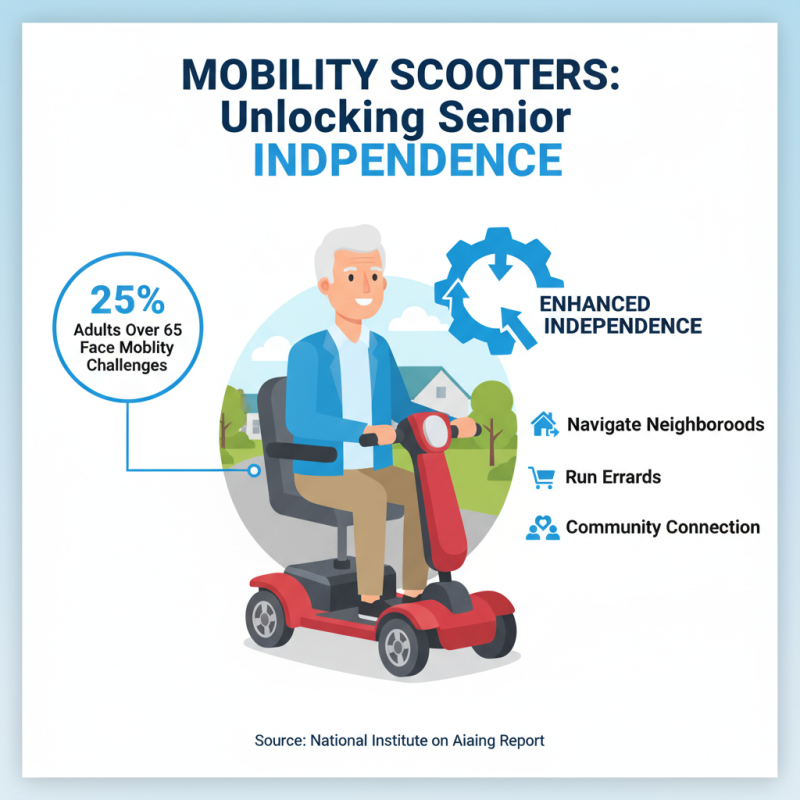
As seniors strive for greater independence, mobility scooters are more vital than ever. According to a report from the National Institute on Aging, 25% of adults over 65 face mobility challenges. These scooters enhance independence and offer a sense of freedom. They help seniors navigate their neighborhoods, run errands, and feel connected to their community.
Several factors influence scooter choices, like weight capacity, battery life, and terrain adaptability. A recent survey highlighted that around 60% of seniors prioritize weight capacity when selecting a scooter. This consideration ensures safety and comfort. However, many overlook terrain adaptability, often finding their scooters unsuitable for uneven surfaces. Some models can struggle on hills or gravel, impacting usability. Effective choices require balancing these features, ensuring mobility without compromising safety.
User comfort is another crucial aspect. Many models come with adjustable seats and armrests. Yet, not all designs cater to different body types. A scooter might have great speed but poor ergonomics. This leads to discomfort over longer distances. Seniors need to test these scooters before making decisions. Personal experience is invaluable when choosing a scooter for enhanced mobility and independence.
Choosing the right scooter for seniors involves careful comparison. Each model has its unique advantages and limitations. For example, some scooters offer excellent maneuverability indoors. However, they might lack the battery life needed for longer outdoor trips. Seniors should consider their specific needs when evaluating these options.
Weight capacity is a crucial factor. Some scooters support more weight but can be bulkier. This can make them harder to transport. Compact models are easier to handle but may not provide the same stability. Mobility restrictions might mean needing a more robust scooter, which can complicate everyday use.
Another point to consider is comfort. Padded seats and adjustable armrests can enhance the experience. Still, too much padding may lead to difficulty getting in and out. Seniors often prioritize safety features such as lights and mirrors. However, these extras can add to the overall cost. The key is to find a balanced solution that meets mobility needs without compromising comfort or safety.
Using scooters can greatly improve mobility for seniors. However, safety is crucial. Regular maintenance checks are essential. Inspect the brakes, tires, and lights consistently. This helps prevent accidents.
Seniors should practice using scooters in safe environments. Empty parking lots work well for this. Familiarizing oneself with controls is important. Speed and maneuvering can feel challenging at first. Gradual practice builds confidence.
Be mindful of surroundings. Watch for steep hills or uneven surfaces. It's easy to overlook tiny obstacles. Best to navigate with care. Sometimes, seeking help from friends or family can enhance the experience. Encourage open conversations about challenges encountered. This can lead to useful adjustments.
| Model | Weight Capacity (lbs) | Range (miles) | Top Speed (mph) | Features |
|---|---|---|---|---|
| Model A | 300 | 15 | 5 | Compact, Lightweight |
| Model B | 350 | 12 | 6 | Adjustable Seats |
| Model C | 400 | 20 | 5 | Heavy-Duty, Long Battery Life |
| Model D | 250 | 10 | 4 | Portable, Easy to Fold |
| Model E | 300 | 18 | 5.5 | Comfortable Seat, All-Terrain |
| Model F | 450 | 25 | 7 | Smart Features, Bluetooth Connectivity |
| Model G | 350 | 15 | 6 | Sturdy Frame, Compact Design |
| Model H | 300 | 12 | 5 | Easy Maneuverability, High-Visibility Lights |
| Model I | 250 | 10 | 4.5 | Lightweight, Budget-Friendly |
| Model J | 400 | 22 | 6.5 | Robust Design, Plush Seating |