

How to Choose the Best Agricultural Forklift?
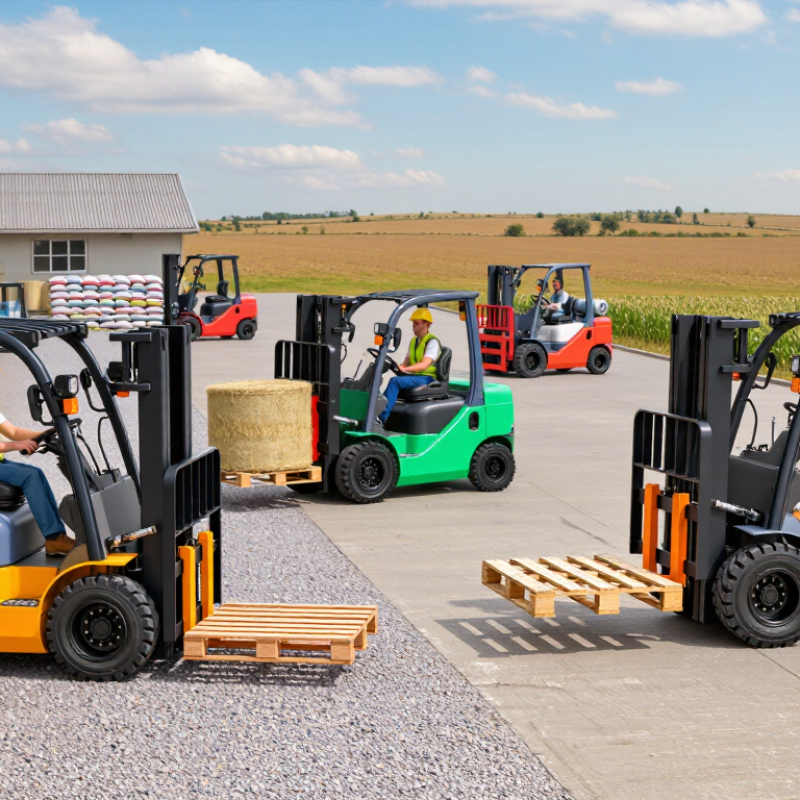
For 2.5–7-ton agricultural work, Class IV and Class V trucks serve different ground conditions. Class IV uses cushion tires and suits smooth concrete floors, packing areas, and covered warehouses. Class V uses pneumatic tires and handles gravel, compacted soil, and uneven yards more effectively.
The Industrial Truck Association classification supports this basic distinction, but capacity labels can mislead. A 5-ton rating may apply only at a specific load center and mast height.
Farm loads are rarely uniform. A wet pallet of produce, a fertilizer bulk bag, or a long crate can shift the center of gravity. Check the capacity plate before comparing models. ANSI/ITSDF B56.1 requires rated-capacity information, while OSHA guidance emphasizes trained operators, inspections, and stable loads.
OSHA estimates that forklifts cause about 85 fatalities and 35,000 serious injuries annually in the United States. That figure makes daily inspection more than paperwork.
Class V is usually the safer practical choice outdoors, especially where tires meet mud, stones, or drainage channels. Class IV may reduce tire damage and turning effort on smooth floors.
However, choosing only by tire type is incomplete. Measure aisle width, ramp gradients, attachment weight, and typical load centers.
The neat answer is often wrong. Agricultural sites change after rain, harvest, and cleaning, so reassess the choice seasonally. A short trial with real loads can reveal problems that a specification sheet hides.