


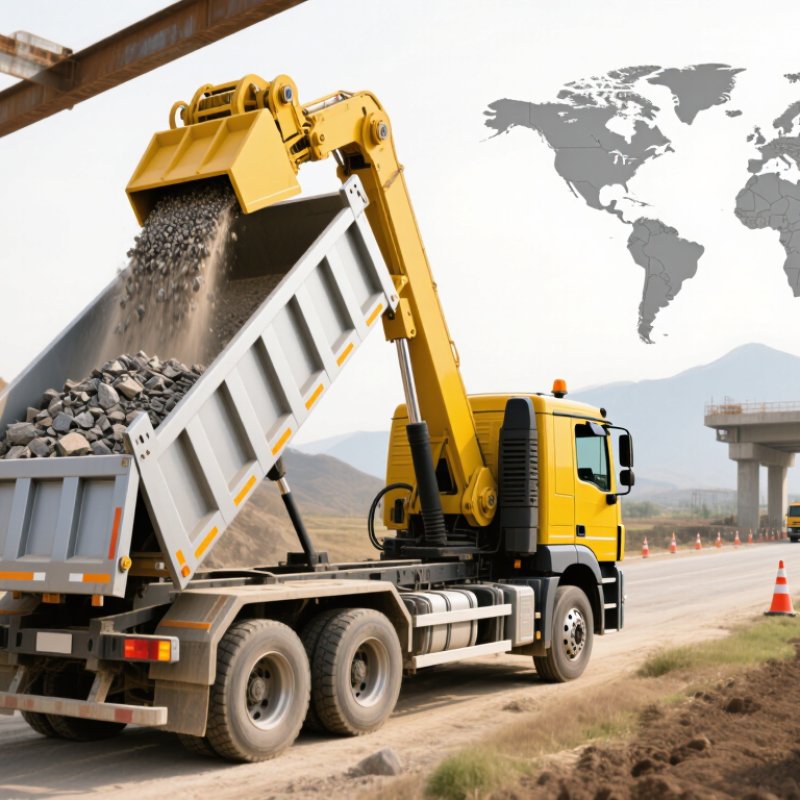
Choosing an end dump truck requires more than checking its maximum payload. Buyers should match the body volume, axle rating, and suspension to the material being hauled. Wet soil weighs far more than dry aggregate. An oversized body may overload the axles before it looks full.
Terrain matters greatly. A reinforced frame and suitable ground clearance help on rough construction roads. For long highway routes, fuel use, tire wear, braking performance, and legal axle limits deserve closer attention.
I have seen operators focus on capacity while overlooking turning space at crowded loading sites. That mistake can slow every delivery.
Hydraulic reliability should also guide the decision. Ask about lifting speed, cylinder protection, hose routing, and access for daily inspections. A truck that tips smoothly reduces waiting time, but unstable ground still creates serious risk. Cab visibility, warning systems, and operator training should never be treated as optional details.
Maintenance support can decide whether the truck earns money or sits idle. Buyers should confirm spare-part availability, service skills, warranty terms, and realistic repair times in the target region. Climate adds another concern. Dust, heat, freezing temperatures, and coastal moisture can affect seals and electrical connections.
Total cost is often less obvious than the purchase price. Calculate fuel, tires, scheduled maintenance, insurance, downtime, and resale value. A lighter truck may save fuel, but it might struggle with demanding loads. The cheapest choice is not always the most economical. Sometimes, the better answer is a smaller body used consistently within safe limits.