

Choosing who makes the best Digital Air Compressor in China takes more than comparing horsepower, price, or a polished control panel. Buyers need to examine efficiency, uptime, service coverage, and how accurately a machine follows changing demand. Small details matter: a pressure sensor that responds smoothly, clear alarm histories, and technicians who can explain a fault without guesswork. Real factory floors are less tidy than product brochures suggest.
The U.S. Department of Energy’s Improving Compressed Air System Performance: A Sourcebook for Industry reports that compressed air can account for about 10% of industrial electricity use. That figure makes control quality and system design important purchasing questions, not optional extras. Compressed-air auditor and industry contributor Ron Marshall’s published work emphasizes measuring system demand and managing it carefully. Put simply, “Measure the demand before choosing capacity” is a paraphrase of that principle, not a verbatim quotation. A useful reminder.
This introduction compares Chinese manufacturers through practical evidence: product specifications, monitoring functions, verified efficiency information, maintenance support, and documented customer experience. It also distinguishes genuinely useful digital features from dashboards that merely look impressive. Not every factory needs the same setup. A food plant with steady demand may value different controls than a workshop with frequent load changes. Public information can be incomplete, and company claims are not independent test results. That deserves scrutiny. The strongest choice is therefore not automatically the largest brand or the lowest quote; it is the supplier whose equipment and support fit the plant’s measured needs.
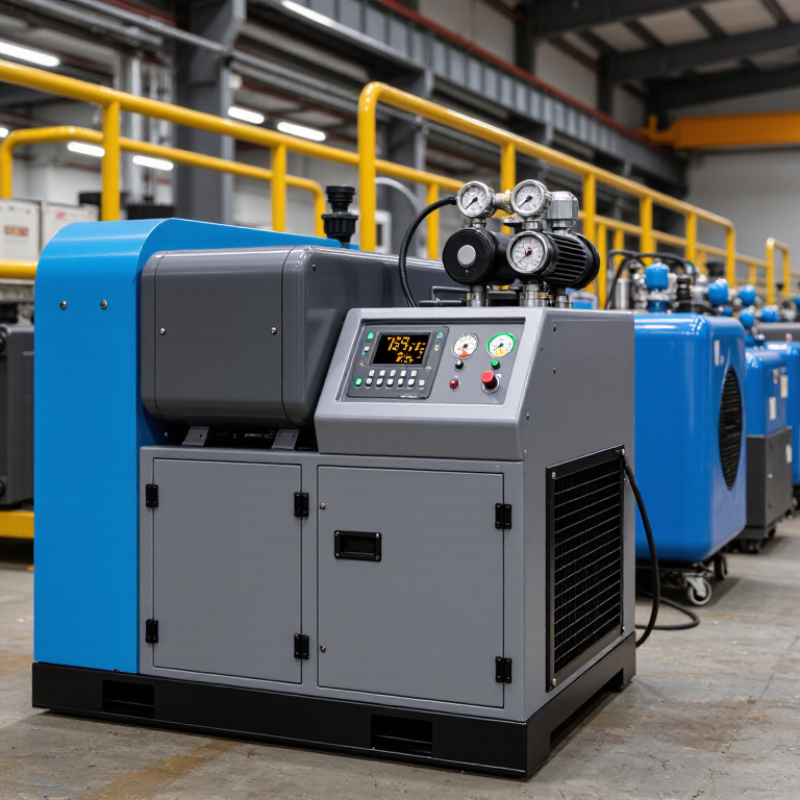
A digital air compressor is not simply a conventional machine with a screen. It combines sensors, control software, and communication tools to track operating conditions. Typical readings include discharge pressure, temperature, motor load, and run time. Some systems also measure airflow and electricity use, helping operators compare output with energy demand.
The U.S. Department of Energy’s Improving Compressed Air System Performance sourcebook estimates that compressed air accounts for about 10% of industrial electricity use. That figure makes monitoring valuable, but digital features alone do not guarantee efficiency. A dashboard may show pressure swings while leaving leaks or poor system settings untouched. In practice, useful data must lead to adjustments, maintenance, or further investigation. That part is easy to overlook.
Tips: Check which measurements the controller records, and whether operators can review trends over time. Compare readings with an independent meter when accuracy matters. A connected compressor is not automatically a “smart” system. Data quality matters.

China’s digital air compressor market is organized around several layers, not one kind of manufacturer. Core producers assemble compressors and integrate variable-speed drives, sensors, and control software. Some specialize in rotary-screw units; others focus on oil-free designs or compact machines for workshops. The best fit depends on the duty cycle. Not one recipe.
Component suppliers provide motors, air ends, valves, and monitoring modules. System integrators connect compressors to dryers, filters, storage tanks, and plant control networks. This matters on a factory floor: a compressor may display pressure accurately, yet still waste energy if its controls do not coordinate with the rest of the air system.
Sales and service firms form another important layer. They help with sizing, installation, spare parts, and maintenance—details that are easy to overlook in a product comparison. Buyers can ask for measured flow and power data at realistic operating pressures, plus clear service intervals. A digital dashboard looks useful, but its readings need context. Even a careful comparison can miss local differences in technician availability or replacement-part lead times. Those practical gaps deserve attention before choosing a supplier.
China’s digital air-compressor manufacturers differ in the problems they are best equipped to solve. Some focus on compact, oil-free units for dental rooms, laboratories, and small workshops. Others build higher-capacity systems for factories, where steady pressure matters more than a small footprint. Their strengths often show in practical details: readable pressure displays, accessible filters, and controls that make routine checks straightforward.
Several manufacturers emphasize variable-speed drives and sensor-based monitoring. These features can help match output to demand and flag unusual operating conditions before a minor issue grows. Yet a digital screen alone does not prove efficiency or reliability. Buyers should compare measured airflow, pressure stability, noise levels, and performance under realistic duty cycles. Ask for test conditions, not just headline figures.
Service capability also separates capable suppliers. A well-designed compressor is less useful if replacement filters are difficult to obtain or troubleshooting depends on a distant technician. Check warranty terms, spare-parts availability, and the clarity of operating instructions. Small details count. A drain valve that is awkward to reach can complicate daily maintenance. I would not judge a manufacturer from a catalogue alone; factory testing and customer references add useful context, though they may not reveal every weakness.
Who Makes the Best Digital Air Compressors in China?
Efficiency comparisons only make sense under matching conditions. Measure delivered airflow at the pressure your workshop actually needs, not just the advertised maximum. Record power draw during full load, part load, and idle periods. Measure the real load. A compressor that looks efficient on paper may waste energy when demand fluctuates. Check whether variable-speed control follows changing air use smoothly, without frequent starts or pressure swings.
Reliability shows up in details that are easy to overlook. Inspect service access, filter replacement intervals, cooling airflow, and the clarity of fault records. Ask for operating data from a comparable installation, including ambient temperature and duty cycle. Numbers need context. Smart controls should show pressure trends, energy use, alarms, and maintenance prompts in plain language. A clean dashboard can still hide poor sensor calibration, so verify readings with independent instruments. I would not judge a system from a short demonstration alone; real production rarely behaves so neatly. Request a controlled trial, and note both the measured results and the inconvenient exceptions.
A practical framework for comparing efficiency, reliability, and smart controls
Suggested evaluation weights—not measured market data or ratings of manufacturers. Compare energy efficiency using specific power (kW per m³/min) at the same operating pressure; assess reliability using service records and documented operating hours; and check controls for features such as variable-speed operation, pressure monitoring, alarms, and remote access.
Choosing a digital air compressor in China depends less on headline capacity than on the plant’s duty cycle, air quality, and service needs. The U.S. Department of Energy’s Improving Compressed Air System Performance guide reports that compressed air can account for about 10% of industrial electricity use, and up to 30% in some facilities. That makes part-load efficiency worth checking. A workshop running one shift may suit a compact, fixed-speed unit; a plant with frequent demand swings may benefit from variable-speed control and load monitoring. Fit matters.
For food, pharmaceutical, and electronics production, assess filtration, drying, and oil carryover against the required air-quality specification before comparing prices. A dusty mine or metalworking site may need robust intake filtration, accessible maintenance points, and reliable cooling. Ask manufacturers for measured performance at your actual pressure and flow, not only nominal motor power. ISO 1217 provides test methods for compressor performance, which helps make supplier figures more comparable. Still, a test result cannot predict every installation. Pipe leaks, heat, and poor controls can erase expected savings. Request local spare-parts lead times and a service plan; digital alerts are useful, but they do not replace hands-on maintenance.
An application-led comparison of compressor technologies, operating requirements, and manufacturer capabilities. No company or brand rankings are included.
| Industrial Application | Typical Compressor Configuration | Indicative Working Pressure | Air Quality and Treatment | Useful Digital Features | Manufacturer Capabilities to Evaluate |
|---|---|---|---|---|---|
| General manufacturing | Rotary screw compressor; variable-speed drive (VSD) where demand varies | Commonly around 7–10 bar(g), subject to equipment requirements | Aftercooler, moisture separator, receiver, and correctly sized dryer and filters | Pressure monitoring, load-hour tracking, alarms, and VSD control | Ability to size the unit to measured demand, document performance, and provide locally available parts and service |
| Food and beverage | Oil-free compressor for critical air applications, or an appropriately designed compressed-air system with validated downstream treatment | Often around 7–10 bar(g); confirm the pressure required at each point of use | Specify filtration, drying, and air-quality limits according to whether air contacts products, packaging, or equipment | Filter and dryer status monitoring, condensate alerts, and maintenance records | Documented air-quality options, hygienic system design support, and clear maintenance and validation guidance |
| Pharmaceutical production | Oil-free or suitably treated compressor system selected against the facility’s quality risk assessment | Set to process and equipment requirements; many plant systems operate near 7–10 bar(g) | Define the required ISO 8573-1 particle, water, and oil classes at the point of use; treatment depends on the specified class | Data logging, alarm history, operating-status records, and monitoring of treatment equipment | Ability to supply technical documentation, support qualification activities, and explain the complete air-treatment train |
| Electronics and precision assembly | Rotary screw compressor with VSD for variable demand; oil-free configuration where the process requires it | Typically around 7–10 bar(g), with pressure stability confirmed for sensitive tools and processes | Use specified filtration and drying; define ISO 8573-1 purity classes for the actual application | Stable pressure control, dew-point monitoring, remote alarms, and energy-use reporting | Low-pressure-drop system design, reliable control integration, and support for measuring air quality and energy use |
| Automotive assembly and workshops | Rotary screw compressor; VSD may suit plants with fluctuating shifts or tool demand | Commonly around 7–10 bar(g); check pressure losses across piping and treatment equipment | Moisture removal and filtration appropriate to pneumatic tools, paint processes, and other end uses | Networked sequencing for multiple units, fault alerts, and operating-hour tracking | Experience with multi-compressor systems, service response, spare-parts availability, and clear commissioning support |
| Spray painting and coating | Rotary screw compressor with suitable air treatment; final selection depends on booth demand and process quality | Often around 7–10 bar(g); verify the spray equipment’s required inlet pressure | Dry, clean air is important; select filters and dryers to meet coating-process requirements and control oil and moisture carryover | Dew-point alarms, filter condition monitoring, and pressure-drop tracking | Ability to design treatment for the required finish quality and to size equipment for peak booth demand |
| PET bottle blowing | High-pressure compressor or booster system designed for PET blowing; a standard plant-air compressor alone may not provide the required pressure | High-pressure systems commonly operate in the tens of bar; confirm the bottle-machine specification before selection | Provide cooling, moisture separation, and filtration suitable for the machine and product requirements | High-pressure monitoring, sequencing, temperature alarms, and production-linked control | Demonstrated high-pressure engineering capability, safety documentation, and service support for the complete compressor package |
| Small workshops and intermittent users | Reciprocating compressor for intermittent duty, or a compact rotary screw unit for more continuous demand | Commonly around 7–10 bar(g), depending on tools and equipment | Basic moisture separation and filtration; add drying where the application or environment requires it | Run-hour counter, pressure switch or controller, and overload or temperature alarms | Correct duty-cycle guidance, straightforward maintenance, noise information, and accessible consumables |
Selection note: Pressure ranges are indicative operating values, not product specifications. Required capacity, air quality, duty cycle, ambient conditions, and pressure at the point of use should be established before comparing manufacturers. Ask suppliers for measured flow and power data under stated test conditions, warranty terms, service coverage, and the full system configuration.